


There are many opinions about camping power – and just as many solutions. That's why it can be difficult to choose between a power station and a generator.
Here's a quick and honest comparison: what they can do, what they can't do, and when one makes more sense than the other. The goal is for you to quickly make a choice that suits your trips, your equipment, and your budget.
A power station – also known as a power bank or mobile power supply – is essentially a giant battery packed into a handy box. It stores power that you can later use to charge your devices or power smaller appliances when you're far from the mains.
Modern power stations like Bluetti and Ecoflow have become incredibly popular among campers, and for good reason. They operate quietly, they are easy to transport, and you can charge them from home or combine them with a portable solar system to become completely self-sufficient.
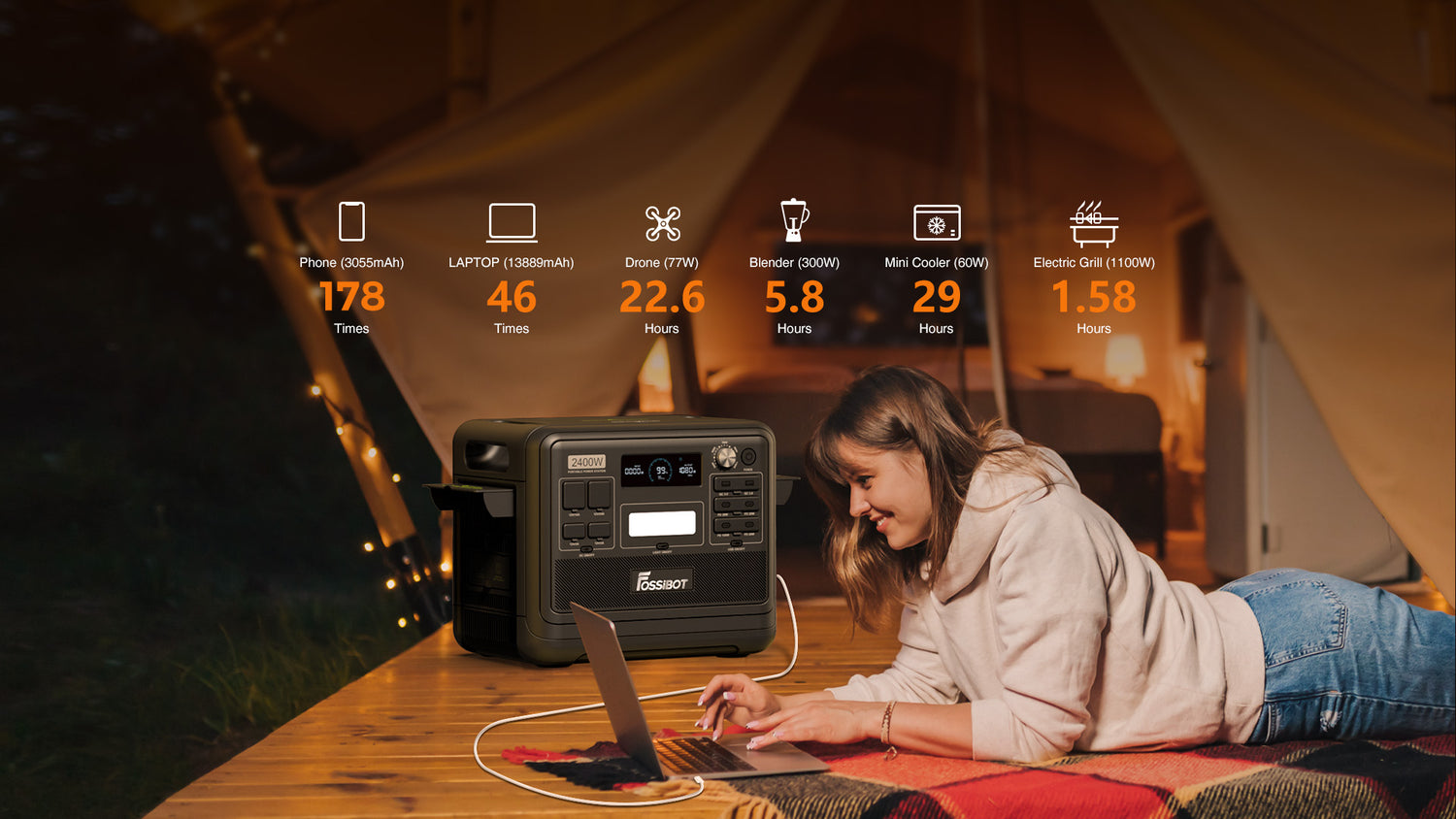
Silence is worth its weight in gold
The biggest advantage of a power station is that it is completely silent. No humming engine noise waking up the neighbors at the campsite at 6 in the morning. You can use it inside your tent, caravan or car without worrying about dangerous exhaust fumes.
Easy operation
A power station requires no special knowledge. You press a button and the power is ready. No gas to pour, no draft to tear into, and no maintenance to worry about.
Flexible charging
You can charge your power station from home, in your car while driving, or combine it with solar panels to get free power from the sun. Many campers invest in a portable solar system, which makes them completely independent of external power sources.
Indoor use
Unlike generators, you can safely use a power station inside your vehicle or tent. No risk of carbon monoxide poisoning or other dangerous gases.
Limited capacity
A power station cannot run forever. Depending on its size, it can provide power for anything from a few hours to several days, but then it needs to be recharged. If you need to power larger appliances like a refrigerator for a longer period of time, capacity can be a challenge (but here solar panels and other equipment can be used).
Higher purchase price
Power stations are generally more expensive to purchase than generators of equivalent output. A proper power station for camping can cost several thousand kroner.
Lower power for large appliances
Even the largest power stations have difficulty operating highly power-intensive devices such as heat pumps or large air conditioners for extended periods.
A camping generator is a gasoline or gas-powered engine that produces electricity. It has been the go-to solution for campers for decades, and there are good reasons for its popularity.

High power and long operating time
A generator can produce continuous power as long as you have fuel. It can power virtually any appliance you need – from refrigerators to microwaves to space heaters.
Lower purchase price
Generators are typically cheaper to purchase than power stations of similar output. You can get a decent generator for camping for under 5,000 kroner.
Reliable power source
As long as you have fuel, you have power. No worries about charging or battery capacity.
Noise and odor
Generators are noisy. A lot. Most campgrounds have rules about when you can run your generator, typically only a few hours a day. They also produce exhaust fumes and smell like gasoline.
Maintenance
A generator requires regular maintenance. Oil changes, air filters, spark plugs – everything needs to be checked and replaced at regular intervals.
Fuel logistics
You should always carry petrol or gas with you and make sure to refuel. In remote areas, finding fuel can be a challenge.
Not for indoor use
Generators should NEVER be used indoors due to the risk of carbon monoxide poisoning. They should be placed outdoors with good ventilation.
| Features | Power Station | Generator |
|---|---|---|
| Noise level | Silent | High noise level |
| Indoor use | Yes, definitely. | No, dangerous. |
| Maintenance | Minimal | Regular service |
| Fuel requirements | No (charging only) | Yes, continuously |
| Effect | 300-4000W | 1000-8000W+ |
| Operating time | Limited to capacity | Unlimited fuel |
| Purchase price | Higher | Lower |
| Environmental impact | Low (especially with solar cells) | Higher (exhaust) |
Choose a power station if:
Choose a generator if:
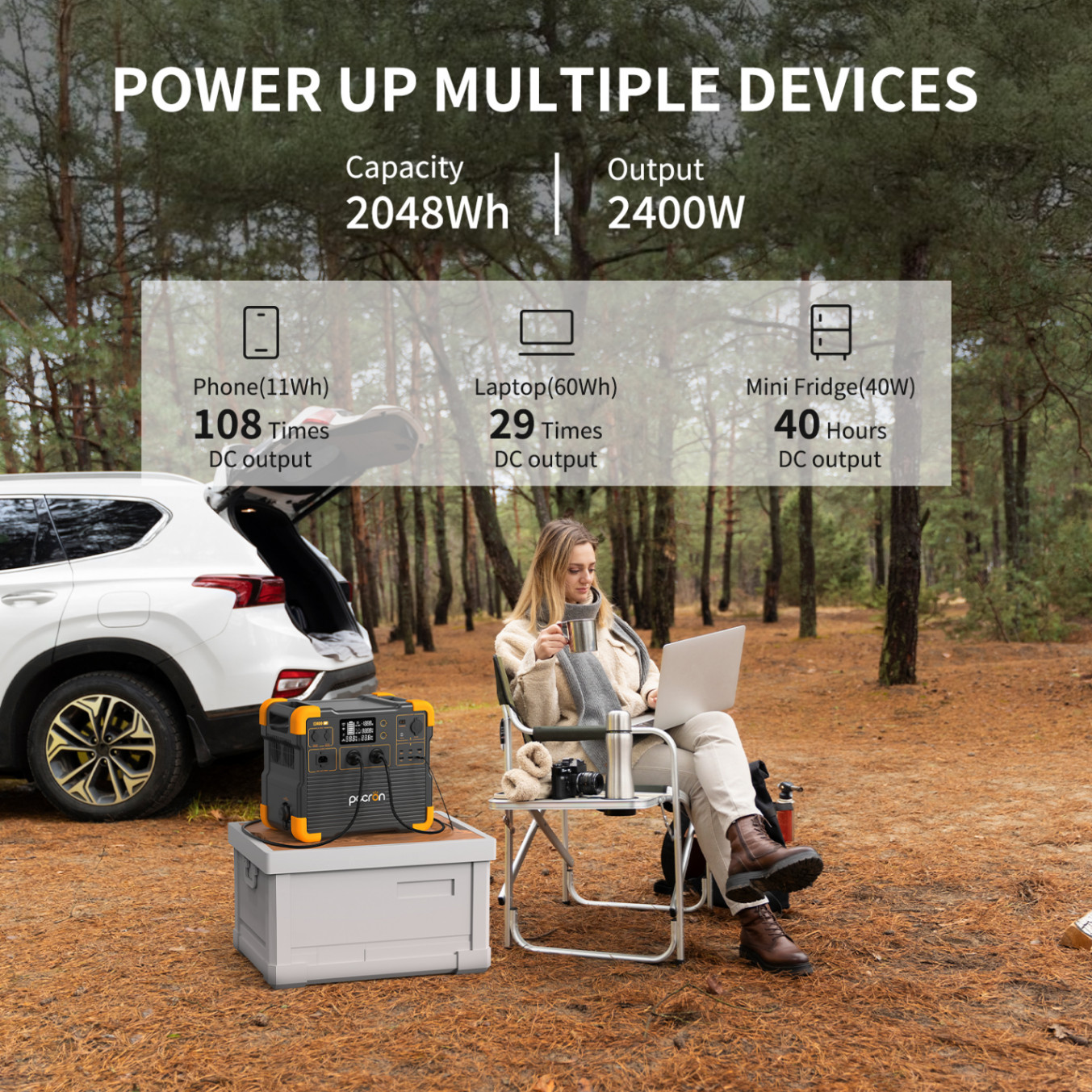
Many experienced campers actually end up having both. A power station for everyday use – charging devices, LED lighting and smaller appliances – combined with a generator as a backup for larger power needs or longer trips.
If you invest in a portable solar system, you can combine the best of both worlds: Quiet, clean power from the power station, charging via solar cells during the day, and the generator as a safety net on very long trips or during periods without sun.
For power station users:
For generator users:
Technology is evolving rapidly. Power stations are getting bigger, more efficient and cheaper, while generators are becoming more environmentally friendly and quieter. The combination of a power station with a portable solar system is already the most popular solution among serious campers.
Whatever you choose, the most important thing is to find a solution that matches your camping style and needs. A good camping power solution can be the difference between a stressful experience and the perfect outdoor vacation.
The optimal choice always depends on your specific needs, budget, and camping habits, but with the right planning, both power stations and generators can give you the freedom and comfort you seek on your camping adventures.